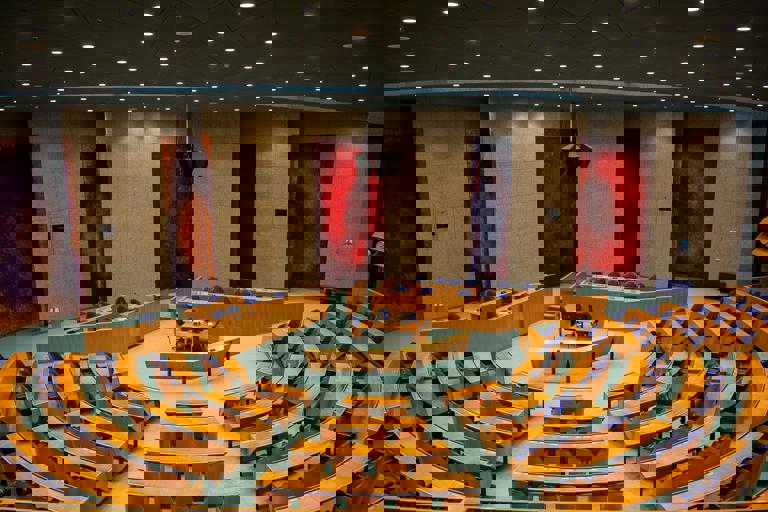
In a historic session that stretched into the early hours, Parliament has approved a much-debated increase to the national minimum wage. The marathon debate witnessed fervent exchanges across the political spectrum, as lawmakers considered the far-reaching implications for workers, employers, and the broader economy. The bill, now passed, marks one of the government’s most contentious policy moves in recent years, reflecting both public demand and economic uncertainty.
Supporters of the minimum wage increase argue that it is a necessary response to rising living costs and growing income inequality. Ministers highlighted evidence from the Office for National Statistics showing stagnating real wages over recent years, despite modest economic growth. "People deserve a fair day's pay for a day's work," said Labour MP Caroline Harris, who has championed the measure since its inception.
The new legislation raises the minimum wage from £10.42 to £11.50 per hour for workers aged 23 and over. The government estimates that more than 2.3 million workers will benefit directly from the change. Proponents claim the increase will put more money into the pockets of low-income households, thereby stimulating consumer spending, which could offset any short-term burdens on employers.
However, the business community has voiced strong concerns, with particular emphasis on small enterprises. Many small business owners worry that the wage hike will lead to increased operational costs and, potentially, the need to reduce employee numbers. The Federation of Small Businesses warned that the bill could "undermine job creation at a time when many firms are still recovering from the aftermath of the pandemic."
Economists remain divided on the likely macroeconomic impact. Some research, including a recent study by the Institute for Fiscal Studies, suggests moderate minimum wage rises tend not to cause significant job losses. Still, others caution that the magnitude of this particular increase could tip the balance for marginal businesses, especially in sectors such as hospitality and retail, which traditionally employ a large proportion of minimum wage workers.
The parliamentary debate was characterised by impassioned arguments on both sides. Conservative MP David Mullaney voiced reservations about the plan, urging for more nuance. "We must tread carefully," he argued, "to avoid unintended consequences that result in fewer jobs, particularly in regions that are already economically vulnerable." Meanwhile, trade unions hailed the move as a long-overdue victory for working people.
Public response to the vote has been largely favourable, according to a YouGov poll published this morning, which indicates 64% of respondents support the wage increase. Workers across the country have welcomed the measure, expressing hope that higher incomes will help them better cope with rising rents, energy bills, and food prices. For some, the policy represents a meaningful step towards a more equitable society.
Meanwhile, critics have highlighted potential ripple effects on inflation. By increasing consumer purchasing power, some economists anticipate upward pressure on prices, possibly affecting interest rates set by the Bank of England. However, government officials maintain that the benefits for low-paid workers will outweigh these risks. "The UK cannot compete on low wages," said Chancellor Richard Walker, stressing the need to move towards a high-value, high-wage economy.
Employers now face the challenge of implementing the wage hike with relative speed. The law is set to come into effect in the next financial quarter, providing businesses with only a few months to adjust their payrolls and budgets. Industry groups have called for additional support, including tax reliefs and grant programmes, to help smaller companies manage the transition without relinquishing employees.
Another key aspect of the debate focused on potential automation. Some analysts voiced concerns that higher labour costs could accelerate the adoption of technology in jobs traditionally held by lower-paid workers. This poses a broader question about the future of employment and the need for reskilling and education to prepare the workforce for such transitions. The government has promised to explore investment in training programmes.
The political implications for the government are significant, with the ruling party hoping to bolster its standing among working-class voters ahead of the next general election. Labour officials, however, have maintained pressure for an even higher minimum wage and more comprehensive reforms, framing the current policy as a "necessary but incomplete step toward genuine wage justice." The outcome is likely to be a key issue on the campaign trail.
In the coming weeks, attention will shift to the implementation phase. Regulatory agencies will closely monitor compliance, ensuring that employers adhere to the new standards and that vulnerable workers are not inadvertently disadvantaged. The Low Pay Commission will publish biannual reviews to assess the impact of the policy, providing critical data for future legislative adjustments.
Internationally, Britain’s move aligns it more closely with several other European countries that have enacted similar wage increases in the past decade. Observers from unions and rights organisations argue that the policy is consistent with broader trends in the advanced world, reflecting collective efforts to mitigate widening income gaps and address social cohesion in developed economies facing comparable challenges from globalisation and technological change.